
Global Home Décor Market Set To Hit $880b By 2030
Article

Growth driven by sustainability, digital décor, and personalised styling.
The global home décor market is projected to reach $880.13b by 2030, with a compound annual growth rate (CAGR) of around 5.3% during the forecast period, according to a Mordor Intelligence industry report.
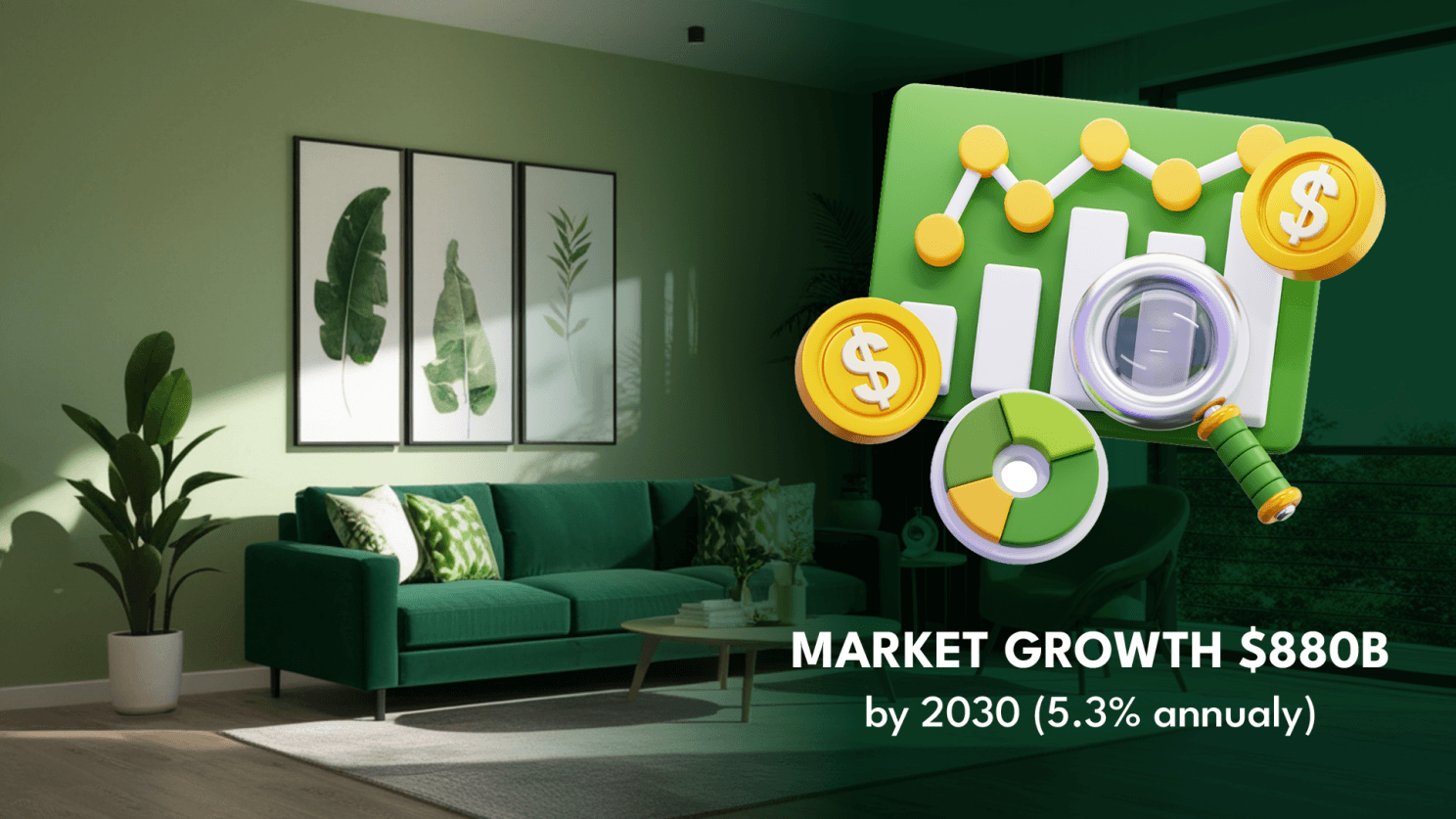
The growth is driven by trends such as rising demand for sustainable materials, digital and tech-enabled décor, personalised interior styling, and mobile-led discovery and online shopping, which are shaping consumer preferences.
The report notes that vertical integration efforts across the interior finishing sector help stabilise costs and protect margins amidst raw material volatility, whilst digital tools—especially AR-based visualisation and smart-home integration—are increasingly central to the buying experience.

Sustainability expectations are also pushing suppliers towards certified and recycled materials in North America, the largest market, supported by strong incomes, steady housing activity, and a longstanding DIY culture.
Asia-Pacific’s growth is fuelled by rapid urbanisation, rising disposable incomes, and expanding e-commerce infrastructure.
Whilst China remains a key manufacturing base, brands are gradually diversifying production to other Southeast Asian markets, making risk management and currency strategies increasingly important.
Major product categories include furniture, textiles, floor coverings, wall décor and accessories, and lighting, with retailers and brands adapting to consumer trends through sustainability initiatives and digital engagement tools.
Source: RetailAsia
What This Means for Brands
As the home décor market continues to grow, digital commerce will play an increasingly important role in how consumers discover, evaluate, and purchase products. Home décor purchases are highly visual and often require inspiration, comparison, and confidence before buying, making digital experiences a critical part of the customer journey.
For brands and retailers, this creates an opportunity to invest in platforms that support rich product storytelling, personalised recommendations, and immersive shopping experiences such as augmented reality previews and interactive catalogues. These capabilities not only help customers visualise products within their own spaces but also improve conversion rates and reduce purchase hesitation.

At Kemana, many retailers in sectors such as furniture, lifestyle, and home décor are already accelerating their digital transformation to meet these evolving expectations. From scalable ecommerce platforms to integrated digital experiences across mobile, web, and in-store channels, the focus is increasingly on creating seamless journeys that combine inspiration, convenience, and personalisation.
As the industry continues to expand toward the projected $880 billion market size by 2030, brands that prioritise strong digital commerce foundations will be better positioned to capture growth and build long-term customer loyalty.
Source: RetailAsia
Related News